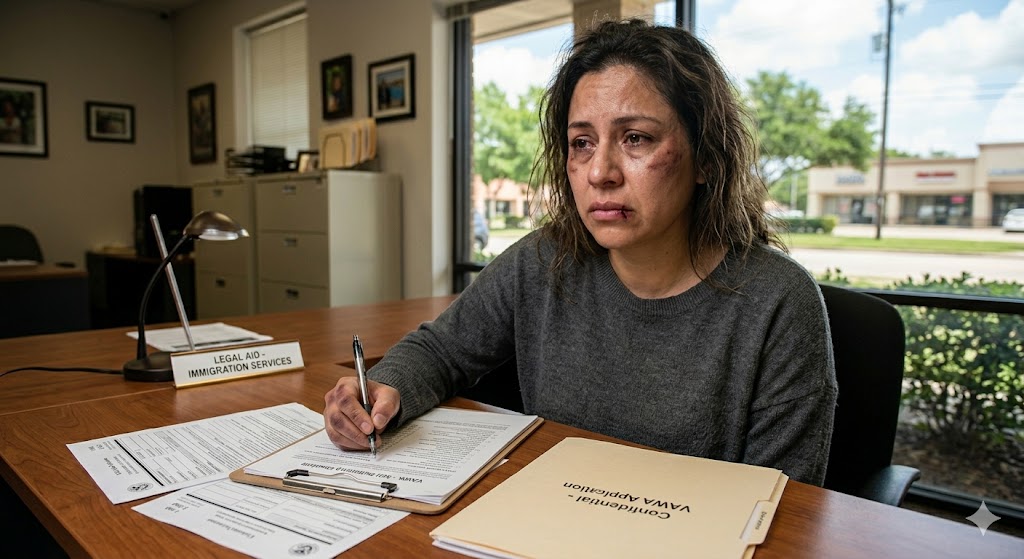
The Violence Against Women Act — Immigration Protection for Abuse Survivors
The Violence Against Women Act, commonly known as VAWA, provides a critical immigration remedy for noncitizens who have been subjected to battery or extreme cruelty by a U.S. citizen or lawful permanent resident spouse, parent, or adult child. VAWA was enacted by Congress to address a specific and devastating reality — that abusers frequently use their victim’s immigration status as a tool of control, threatening deportation to prevent reporting and to maintain dominance over their victims. VAWA breaks that cycle by allowing qualifying individuals to self-petition for immigration relief entirely independent of their abuser, without the abuser’s knowledge, cooperation, or consent.
Who Can File a VAWA Self-Petition
VAWA protection is available to a broader class of individuals than many people realize. Qualifying petitioners include spouses of U.S. citizens or lawful permanent residents who have been subjected to battery or extreme cruelty, children of abusive U.S. citizens or lawful permanent residents, and parents of U.S. citizens who have been abused by their adult son or daughter. Importantly, VAWA is not limited to women — men who have suffered abuse at the hands of a qualifying family member are equally eligible to file. The self-petition is filed directly with USCIS on Form I-360, entirely without the abuser’s involvement.
Key Requirements for a VAWA Self-Petition
To qualify for VAWA relief, a petitioner must establish several core elements. First, the petitioner must have a qualifying relationship with the abusive individual — meaning the abuser is or was a U.S. citizen or lawful permanent resident spouse, parent, or adult child. Second, the petitioner must have been subjected to battery or extreme cruelty during the relationship. Battery includes physical violence, but extreme cruelty is broadly defined and encompasses psychological abuse, sexual abuse, isolation, threats, intimidation, and the weaponization of immigration status against the victim. Third, the petitioner must have resided with the abuser at some point during the relationship. Fourth, the petitioner must demonstrate good moral character. A history of certain criminal convictions can affect eligibility and requires careful legal analysis before filing.
Confidentiality and Safety
VAWA self-petitions are treated with strict confidentiality by USCIS. Federal law prohibits USCIS from disclosing the existence of a VAWA petition to the abuser or to any third party without the petitioner’s consent. This confidentiality protection is absolute — the abuser will not be notified, contacted, or informed in any way. For survivors living in dangerous situations, this protection is not a procedural formality. It is a lifeline.
What Approval Means
An approved VAWA self-petition establishes the petitioner’s eligibility for lawful permanent residence. Depending on the petitioner’s current immigration status and the abuser’s citizenship or residency status, the path to a green card may be immediate or subject to visa availability. Approved self-petitioners may also be eligible for deferred action, work authorization, and access to certain federal public benefits during the pendency of their case. An experienced immigration attorney can assess your specific situation and map the most direct path to safety and legal status.
If you or someone you know may qualify for VAWA protection, contact Alliant Law Group for a confidential consultation at (708) 366-9900. Your safety and your immigration status can both be protected. You do not have to choose between them.